This is a SEO version of PeaceHealth-OregonRegion. Click here to view full version
« Previous Page Table of Contents Next Page »Cardiac rehab
At age 46, Eugene resident Jeff Hardisty laced up his shoes and set out to run the Seattle Marathon. Finishing the race would be an accomplishment anyone could be proud of; however, Hardisty’s story is even more impressive when you learn what he was doing—or rather what was being done to him—just seven short months before the start of the race. “On April 25, 2005, I underwent triple-bypass surgery at Sacred Heart Medical Center,” Hardisty says.
After leaving the hospital, he started cardiac rehabilitation at the Oregon Heart &
Studies show that participating in cardiac rehab reduces death rates after heart events by about 25 percent.
Getting back
on track
people to know that they are not alone and that life goes on and may even be better after learning more about heart disease and how they can manage their own disease and health.” A cardiac rehab program can take place in a hospital or in a separate rehab center. It’s usually staffed by a team of cardiologists, nurses, dietitians, exercise physiologists and specialized therapists.
Typical components of a cardiac rehab program include
exercise training,
cardiovascular monitoring,
classes on nutrition and heart-healthy living, and support and counseling.
A way back
Cardiac rehab can offer people like Hardisty a map back to the life they often fear is lost. “Taking charge and being armed with knowledge revitalizes people’s lives and helps them live life to the fullest,” says Grall. She says studies show that participating in a cardiac rehab program:
■ Improves ftness and helps the heart work more effciently.
■ Reduces symptoms such as chest pain.
■ Helps lower risk factors for heart disease, such as high cholesterol, excess weight and high blood pressure.
■ Decreases death rates after heart events by about 25 percent.
Patients need a doctor’s OK for cardiac rehab to make sure they are appropriate candidates for the program.
Medicare and most private insurance plans may cover up to three months of cardiac rehab, usually once or twice per week, depending on the patient’s progress.
Emotional makeover
For Hardisty, participating in a cardiac rehab program did more than just enable him to run a marathon—it gave him a much-needed boost to his emotional health.
“In some way,” he recalls, “I felt like I had run the race for others, but at the time I wasn’t sure who. Later, when I started volunteering to help cardiac rehabilitation patients at OHVI, I realized the other people I was running for were those coming after me. I’m a survivor. I want to help motivate people to reach their goals.”
To watch a video of Jeff Hardisty’s amazing story, visit www.peacehealth.org/ amazingmedicine.
Vascular Institute (OHVI).
Cardiac rehabilitation is a medically supervised cardiovascular risk-reduction program. It’s designed to help improve the health and quality of life of people who have a history of heart problems, such as heart attack or heart failure, or who’ve had a heart-related procedure, such as bypass surgery or angioplasty.
“Cardiac events lead people to face and fear mortality, often for the frst time,” says Sarah Grall, MS, manager of the Cardiovascular Wellness & Rehabilitation Center at Oregon Heart & Vascular Institute. “Rehab helps
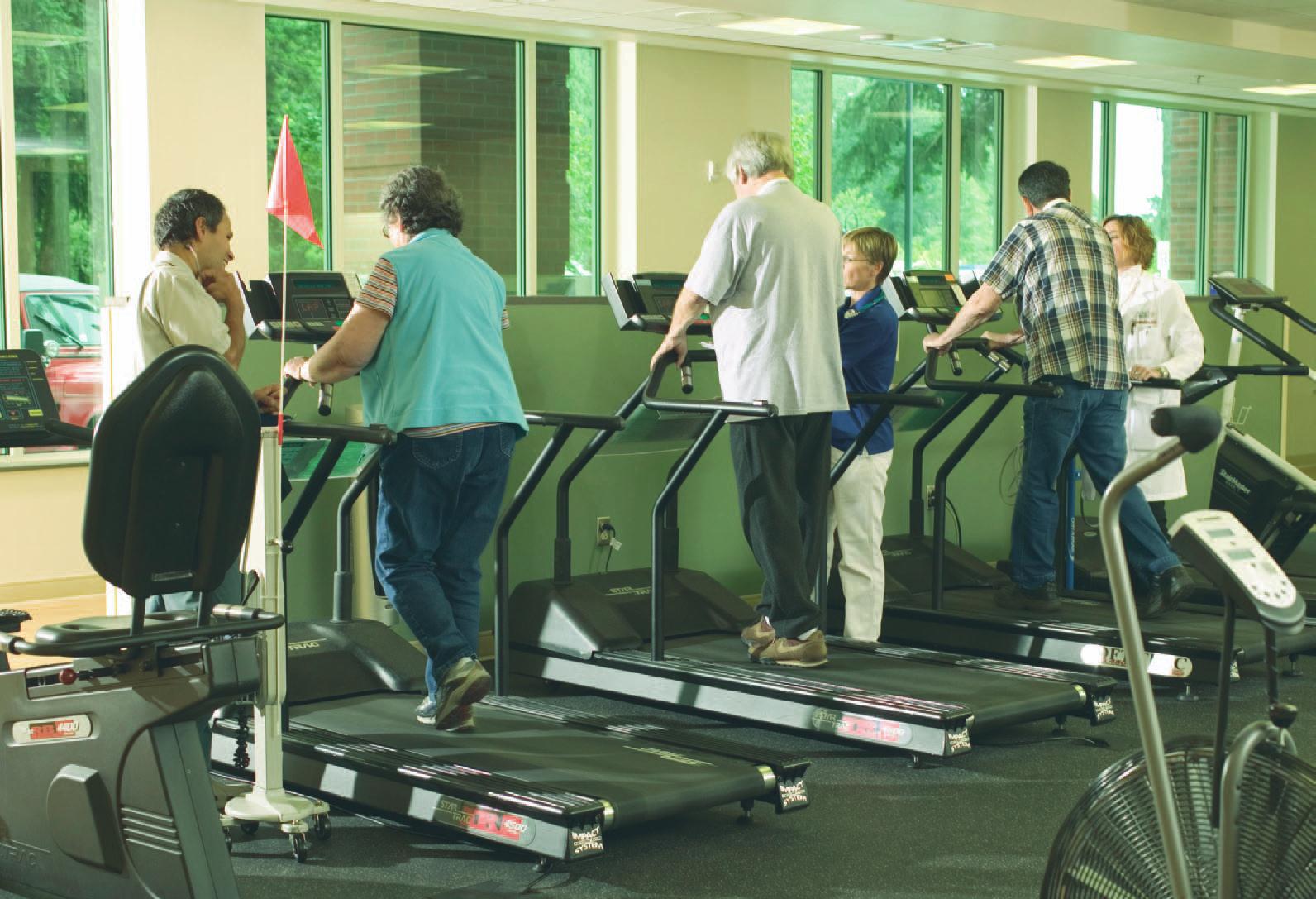
The cardiac rehabilitation center at Oregon Heart & Vascular Institute (OHVI) offers the region’s only medically supervised exercise program, and it’s not just for heart patients. Talk to your doctor if you’d like a referral to join the gym at OHVI.
www.peacehealth.org 13
This is a SEO version of PeaceHealth-OregonRegion. Click here to view full version
« Previous Page Table of Contents Next Page »